
THE LIST WILL BE THE WORK OF SEVERAL MONTHS. HOW QUICKLY I MANAGE TO CREATE THESE WEB PAGES IS AN UNKNOWN AT THE MOMENT. Hours spent (starting 10 Dec 2024): 1.
Contents:
- WILLIAM McKNIGHT DOCHARTY’S LIST:
- SCOTLAND.
- IRELAND
- WALES.
- ISLE OF MAN.
- ENGLAND.
- Original pages, 1954 publication.
- Original pages, 1962 publication – part I (2,500-3,000 feet).
- Original pages, 1962 publication – part II (below 2,500).
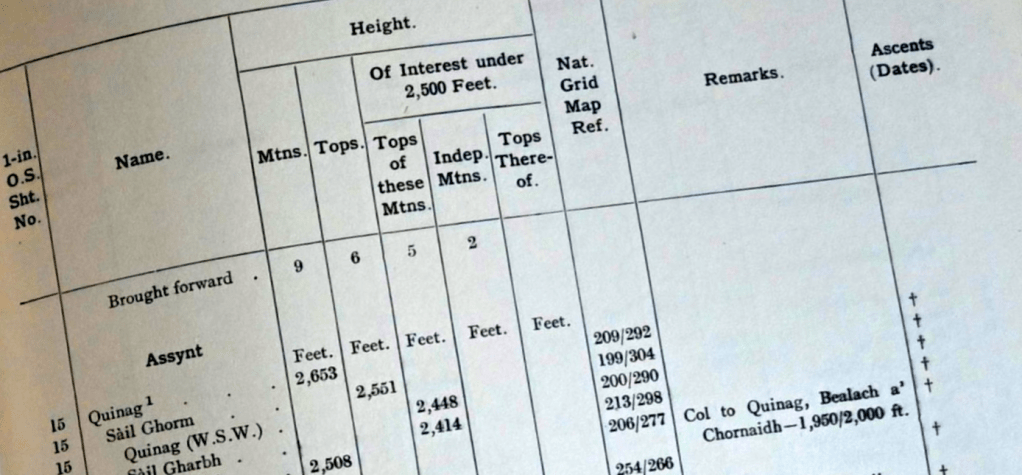
William McKnight’s published his original list of “independent mountains” and “tops” in 1954, revising and adding to the list with an additional two-volume publication in 1962 – the books were printed privately and distributed amongst friends and favoured institutions. The basic premise was to list summits between 2,500 to 3,000 feet in the same style as Sir Hugh Munro’s lists of summits above 3,000 feet. Docharty also included well over a thousand summits “of interest” under 2,500 feet.
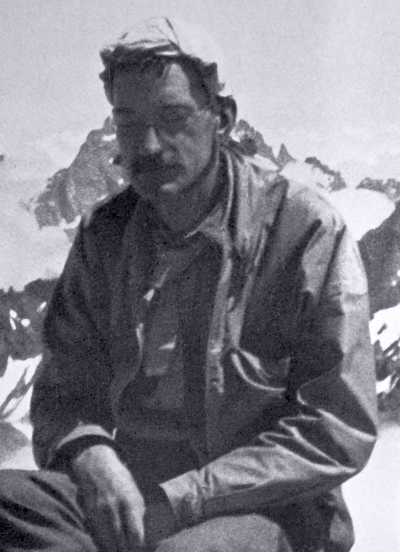
Docharty’s lists do not stand up to modern scrutiny. He was hampered by the limitations, as good as they were, of the Ordnance Survey maps of the time. In some cases apparent summits on the maps did not exist in reality, while others he identified when visiting and area were not shown on the maps. He also modified his list according to whether locations had enough “individuality” in his words, whether they impressed him as having the qualities of true summits, rather than by matters of reascent or distance from other summits. As he only every visited half his chosen locations, it is could therefore also be considered an unfinished project.
The books are, however, a remarkable and inspiring achievement, demonstrating an extraordinary understanding of the mountain landscapes of the British Isles. It does equal Munro’s lists in the sense of being a qualitative rather than quantitave appreciation, and it is worth remembering that even the great Sir Hugh Munro never quite managed to visit all of his listed summits.
These web pages are an attempt to produce a digital version of Docharty’s work. Some locations, especially if unvisited by him, are very debatable, but I’ve always attempted to identify the spot that he intended to be represented.
Jonathan Russell
 JONRUS.COM