Something I posted elsewhere ten years ago – thought I’d copy it here:
Growing up in Southam, a piece of local lore I’m familiar with is that the English Civil War began not at Edge Hill on 23rd October 1642, but at Southam on 23rd August, where there was a ‘skirmish’ in which some soldiers died.
Sitting at home on a grey, wet, windy day, decided to do a bit of digging and learn a little about this.
COVENTRY.
By 1642, the English parliament had decided that it should have the final say when it came to law-making and big decisions of state, not the king. King Charles I, on the other hand, believed that he should have the final say about everything and absolutely not accept any limitations placed on his royal power by parliament. They argued and on 12th August 1642 the king sent out a proclamation that his supporters should take up arms and assemble with him at Nottingham. He had declared war on his own parliament.
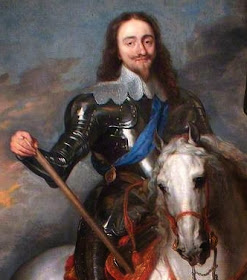
While riding through Warwickshire on his way to Nottingham, Charles learnt that parliamentary forces were intending to occupy Coventry, so he decided to occupy the town first himself.
With cavalry, ground troops and cannon, he succeeded in blasting down the gates of the town on 18th August, but the inhabitants of the town barricaded the streets so effectively that the Royalists could not make their way in. The king’s brutal actions helped alienate him from the citizens of the town, who were subsequently even more pro-parliament. There were a number of deaths, both civilian and military.1,2
SOUTHAM.
A second attack on Coventry by royalist forces was feared, so measures to defend the town were begun under the command of Lord Brook of Warwick Castle. He went to his home town to make sure it was safe and to collect ammunition from the stores there. On 22nd August he passed through Southam intending to rest there, in the process attacking and evicting the rector, Francis Holyoke, from his home. Before his troops had bedded down for the night they learned that royalist forces were in the region, perhaps intending to create a road block at Dunsmore only a couple of miles away.1
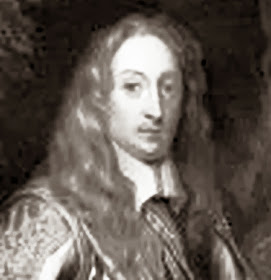
In the dark, Brook roused his men and “led [them] up to the top of a hill … and so lodged all that night in a field not far from the town [of Southam]”. The Royalists made their appearance in the morning and there was a stand-off, with hundreds of men on both sides lined up in battle formation.1
Brook was the first to order his troops to open fire, using cannon to cut down a section of the Royalist cavalry … “five horses [later] being found slaine, and the legs and arms of some of their riders”. He then turned his fire on the infantry with similar devastating effect. The Royalists returned fire, but failed to inflict any injury (although the author in this source is anti-Royalist, so may not be truthful). In further skirmishing “a [Royalist] drummer and two others [were] slaine, and ’twas probably supposed many other … There were some nine prisoners taken in all, and about forty found slaine”. There are mentions of royalist bodies being carried away and disposed of in a river. (It was also rumored that Charles I himself and his champion, Prince Rupert, were with these royalist forces, but fled when they realised they were losing. This, however, this may be fiction.)1
The parish register records a single burial:
John Brown alias Pisely Souldier Under Captain Jones in ye Regiment of Robt Lord Brook. Aug. 23. The same day the Battle was fought Between Lord Brooke and ye Earle of Northampton.5
Where was the battle? A cannon ball, possibly from this conflict, was dug up in a garden on the north side of Southam in 1970. If Royalist troops were indeed in the Dunsmoor area, then perhaps the action took place on the “hill” which is now the cement works quarry north of the town.4 However, Francis Smith, writing in 1825, states that the battle was on the south-west side, between Southam and Bishop’s Itchington, but also that skeletons, possibly from the battle, were found at ‘Southam Grounds’, a name used on Victorian maps of the area immediately to the east of Southam, ‘Southam Fields’ on more recent maps.6
There is an additional tale to be told about Francis Holyoake, vicar of Southam at the time. His is said to have been a staunch royalist, in spite of the town being pro-parliament. Brook detained him and searched his house, allegedly finding ammunition. I’ll research that story for another post.
EDGE HILL.
Having only a small cavalry, Brook could not capitalise on his victory by pursuing the fleeing royalists, but he did seize their abandoned cannon. He and his forces stayed in Southam that night, marching to Coventry the next morning, where they were welcomed by the citizens.1
Throughout England at this time, royalist and parliamentarian forces were jockeying for position, occupying various towns or castles by goodwill, agreement or force, until 23rd October, when the first major pitched battle of the English Civil War took place at Edge Hill. Five hundred died there, with neither side being able to claim a conclusive victory. A period of terror in which perhaps 5% of the British population died in battle, or from disease or starvation.

CONCLUSION
In the sense of a battle in open ground, Southam has a fair claim to be the first recorded pitched battle of the war and John Brown7 to be the first named soldier to have died, unless the Coventry siege has a better claim. There was trouble throughout the country at this time, and it may be that some other town or village has an equal or better claim, but Southam appears to have has the best recorded.
Notes/Sources:
- Author? (1860) The Warwickshire Antiquarian Magazine. Part II.
- http://en.wikipedia.org/wiki/History_of_Coventry#Civil_War_and_aftermath.
- http://en.wikipedia.org/wiki/Battle_of_Edgehill.-
- http://timetrail.warwickshire.gov.uk/detail.aspx?monuid=WA771.
- William Lilley Smith (1894) Historical Notices and Recollections Relating to the Parish of Southam, in the County of Warwick, Together with the Parochial Registers from.
- Francis Smith (1825) Warwickshire Delineated. Page 92.
- Not to be confused with John Brown, the anti-slavery campaigner, executed in the United States in 1859.
Images:
- Brooke: http://en.wikipedia.org/wiki/Robert_Greville,_2nd_Baron_Brooke
- Charles:http://ichef.bbci.co.uk/arts/yourpaintings/images/paintings/aph/large/wmr_aph_n070475_large.jpg
- Gunfire: http://englishare.net/Brit%20Lit%20I/BL1–Lesson%2020.htm
First posted February 2014. Minor edits and typographical corrections made above.
 JONRUS.COM

[…] other than his dictionaries and some sermons – sadly, on 22 August 1642, the day before the Battle of Southam, his world […]
LikeLike